When a client approaches us for an acoustic panel, ceiling tile, or complete ceiling solution, one of the first things we do is ask questions before recommending any acoustic products. That may sound like a small distinction, but it matters. The right acoustic products depend on what is happening in the space, how it is laid out, how much sound absorption is required, what the ceiling needs to accommodate, and what the building will demand after installation.
We have been working in ceiling and room acoustics for more than two decades, with auditorium projects at Gujarat University, the Gujarat High Court and Kevadia Colony, along with theatre projects across several states. That project and installation experience matters because a recommendation needs to work not only acoustically, but also within the actual ceiling, layout and site conditions.
1. What is actually happening in the space?
This is usually one of our first questions. We want to understand how the space is being used before deciding what type of acoustic treatment makes sense. Is it a general office? An open-plan workplace? A classroom? A theatre? A public-facing area? A technical space? A collaboration zone? A reception or lobby? A large open area? The objective may also be different from project to project. One client may be dealing with excessive reverberation. Another may be concerned about speech clarity. Another may want to reduce distracting background noise in an open office. This is why we don’t consider acoustic products a one-size-fits-all solution.
For example, polyester fibre acoustic panels may make sense where lightweight, flexible sound absorption and design customisation are required. Fabric wrapped acoustic panels may be considered where acoustic performance needs to work alongside a more finished interior appearance. Fibre glass wool acoustic panels may be considered when stronger absorption is required. The product follows the acoustic problem, not the other way around.
2. What does the layout look like?
This is usually one of our first questions. We want to understand how the space is being used before deciding what type of acoustic treatment makes sense. Is it a general office? An open-plan workplace? A classroom? A theatre? A public-facing area? A technical space? A collaboration zone? A reception or lobby? A large open area? The objective may also be different from project to project. One client may be dealing with excessive reverberation. Another may be concerned about speech clarity. Another may want to reduce distracting background noise in an open office. This is why we don’t consider acoustic products a one-size-fits-all solution.
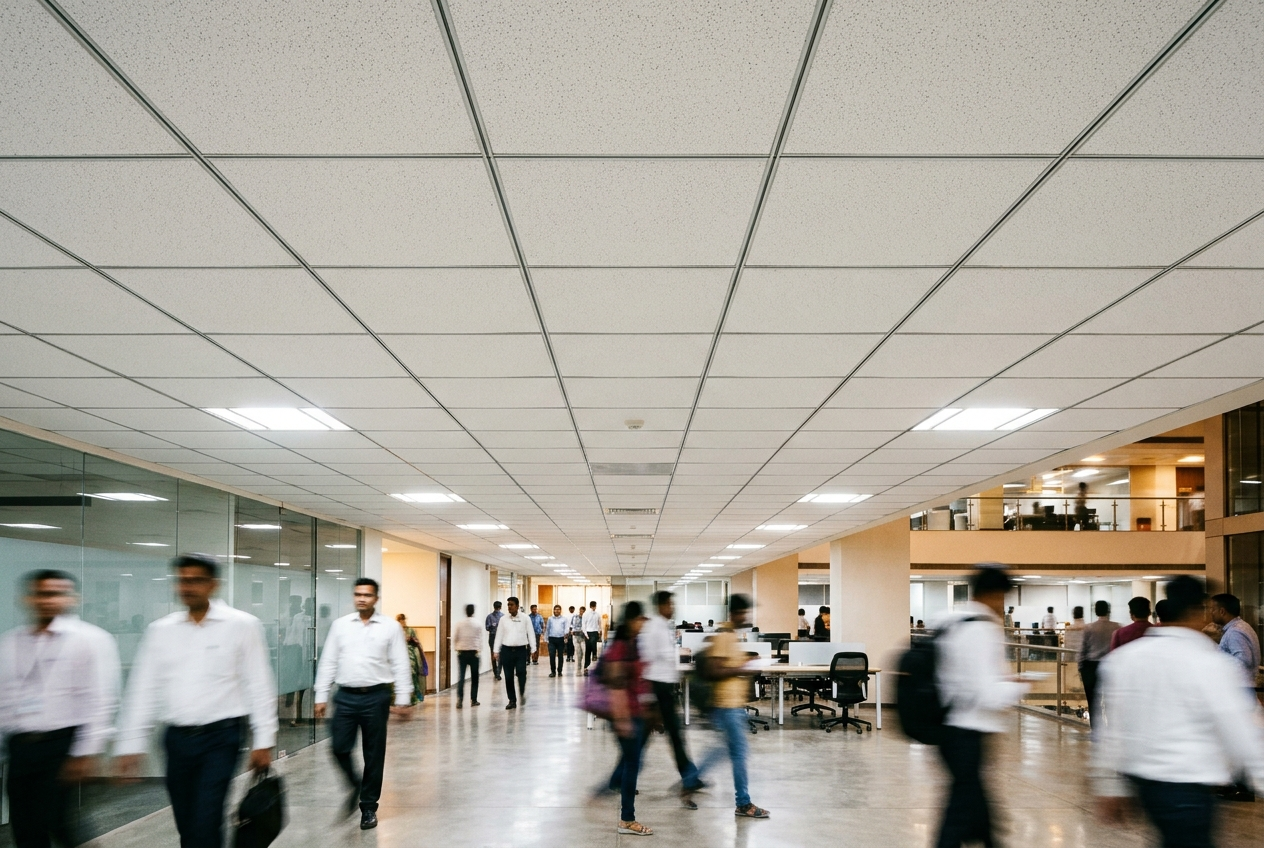
In some projects, a combination might make more sense, such as mineral fibre ceiling tiles for general ceiling areas, polyester fibre acoustic panels or fabric wrapped acoustic panels in selected zones, and baffles or clouds where additional suspended absorption is required. These are not fixed formulas. We ask about the layout because the right combination of acoustic products depends on the space and the level of sound absorption required.
3. How much absorption does the space actually need?
We don’t recommend acoustic products simply because they have a high NRC rating. We first look at the acoustic conditions of the room. Ceiling height, floor finish, glazing, walls, furniture, occupancy and other existing surfaces can all influence how much sound is being reflected. A large office with glass partitions, hard flooring and exposed surfaces can behave very differently from a similarly sized office with carpets and more absorptive finishes. That is why we ask about the existing finishes and the main acoustic complaint before deciding which products to consider.
Depending on the requirement, this could lead us towards mineral fibre ceiling tiles, white and black fibre glass wool acoustic ceiling tiles and panels, polyester fibre acoustic panels, fabric wrapped acoustic panels, wood wool acoustic board or perforated gypsum acoustic boards. The important thing is not simply choosing acoustic products with the highest NRC rating. It is determining where absorption is needed and how much of it the space requires.
4. What does the ceiling need to work around?
The ceiling is rarely an empty surface. We ask about lighting, HVAC, sprinklers, electrical services, detectors, access requirements and the available ceiling depth. For a commercial project, the ceiling may also need to provide continued access to services after handover.
That can influence whether a modular ceiling system is more practical or whether acoustic panels, baffles or clouds can be introduced around an existing ceiling. Where a suspended grid system is required, galvanized T-grids can become part of the discussion alongside the selected ceiling tiles. Depending on the application, this could include mineral fibre ceiling tiles, white and black fibre glass wool acoustic ceiling tiles, perforated acoustic gypsum ceiling tiles or other compatible acoustic products.
5. What will the space demand after installation?
We ask about maintenance as well. Commercial interiors change over time. Lighting gets replaced. HVAC needs servicing. Electrical work happens. Partitions move. Individual ceiling components can become damaged. So, we want to know whether the client needs easy access above the ceiling and whether individual elements may need to be removed or replaced. This can influence the recommendation just as much as the acoustic specification.
For example, modular ceiling tiles can be useful where service access is important, while wall-mounted polyester fibre acoustic panels, fabric wrapped acoustic panels or MDF acoustic panels may be considered for specific areas where the acoustic treatment is intended to form part of the interior design.
6. What does the project environment demand?
We also ask about the actual project environment. What is the humidity like? What are the cleaning requirements? How much traffic will the space receive? Is impact exposure a concern? What installation conditions should we expect? For projects in humid climates, moisture and sag resistance can become relevant when selecting ceiling materials. For some applications, low-maintenance finishes may be more important. In others, the priority may be higher sound absorption. This is why the same material should not automatically be specified for every commercial building.
Amazone By Furnitech‘s range allows different material categories to be considered according to these requirements. For example, our 16mm mineral fibre tiles are available in different textures, edges and sizes and are rated for up to 96% relative humidity. This makes humidity resistance an important specification to consider for projects where environmental conditions are a concern.
7. Does the acoustic treatment need to blend in or become part of the design?
This is another question we ask before recommending acoustic products. Some clients want the ceiling to remain visually neutral. Others want the acoustic treatment to become part of the interior design. That can change the recommendation considerably.
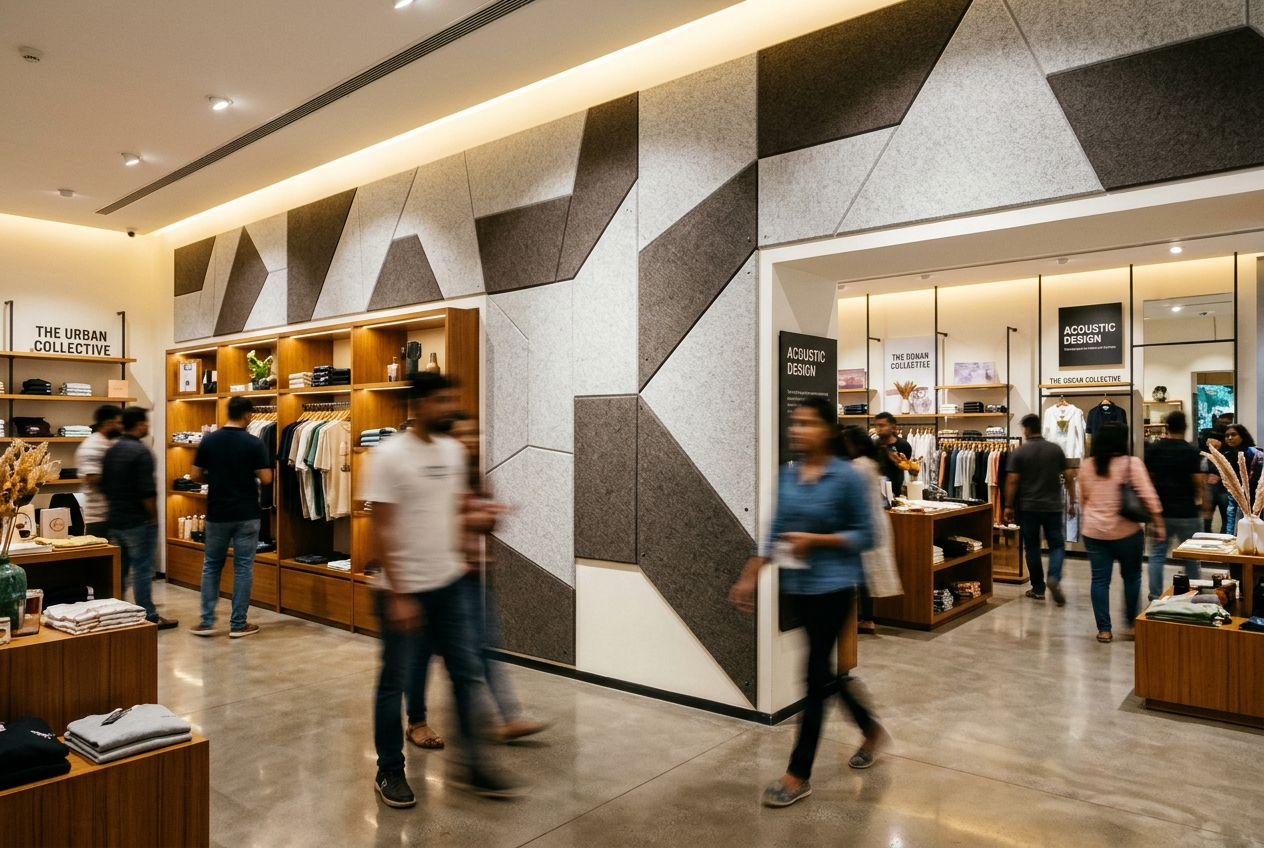
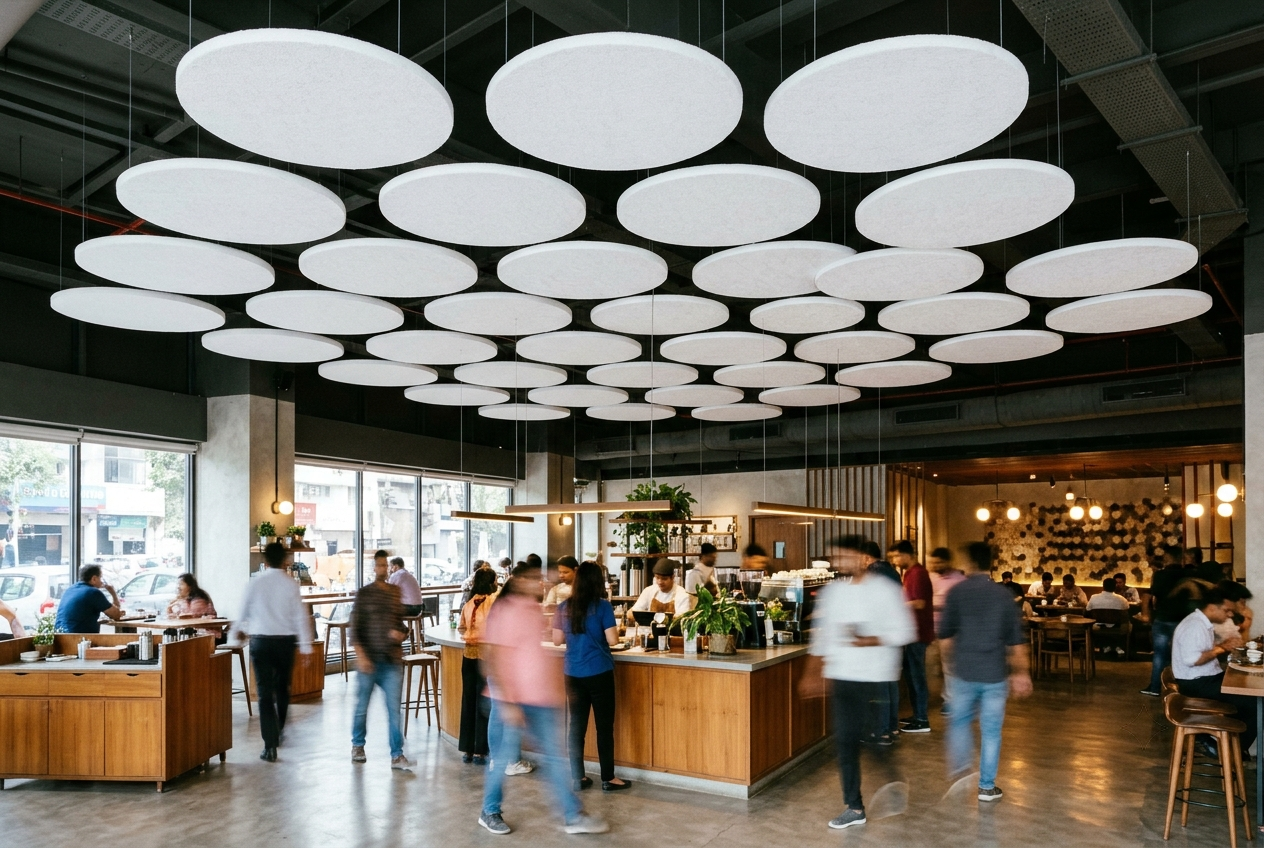
Polyester fibre acoustic panels are available in multiple shades and can be CNC-cut into custom shapes and patterns. Fabric wrapped acoustic panels can provide a softer, finished appearance. MDF acoustic panels can introduce wood-style aesthetics through different patterns and finishes. For projects where the ceiling itself needs to become a design feature, acoustic ceiling clouds and acoustic baffles can also provide suspended acoustic treatment without simply filling the entire ceiling plane.
8. Do you already have an AutoCAD drawing?
When the project moves towards an actual quotation, we ask for the available drawings. If the client has an AutoCAD file, sharing it gives us much more information about the layout, ceiling areas, partitions and other elements that may influence the recommendation.
If an AutoCAD file is not available, the client can provide the approximate area in square feet along with a brief description of the layout. This allows us to look at the project as a combination of spaces rather than simply multiplying the total floor area by a single product.
9. What combination of acoustic products would actually make sense?
Once we understand the space, its layout and acoustic requirements, we can start considering the right combination of acoustic products. For example, a commercial office might use mineral fibre ceiling tiles for general ceiling areas, while selected collaboration zones could use polyester fibre acoustic panels or fabric wrapped acoustic panels. Larger open areas may benefit from acoustic baffles or acoustic ceiling clouds where suspended absorption is appropriate.
A project with different ceiling and wall requirements could also bring in white and black fibre glass wool acoustic ceiling tiles or panels, along with perforated gypsum acoustic boards or tiles. Other projects may call for wood wool acoustic board, MDF acoustic panels, open cell ceiling tiles or metal ceiling tiles, depending on the functional and architectural requirements. The point is not to use every product in a project, but to select the acoustic products that best suit each space and its specific requirements.
10. Do you need a standard product or a customised solution?
Sometimes the project calls for something more specific. In those cases, we can consider the CNC-Cut PET acoustic panels when custom shapes, patterns, perforations, branding elements or other detailed designs are required. CNC cutting can also accommodate practical cut-outs for mounting, lighting or suspension requirements when these are included in the design.
Similarly, where a large or open space needs suspended acoustic treatment with a specific visual concept, the custom acoustic ceiling clouds service allows the size, shape, thickness and colour to be developed around the ceiling plan. These clouds can use fibreglass or polyester fibre and can be designed to suit the layout rather than forcing the layout around a standard shape. This is where the AutoCAD drawing can become particularly useful.
What Clients Can Share With Us
If you are an architect, interior designer, contractor or acoustic consultant working on a project with acoustic requirements, you may already have specific acoustic products or specifications in mind. To help us understand the project properly and evaluate the proposed solution in context, you can share:
- Your AutoCAD file, if available
- Approximate area in square feet
- A brief description of the layout
- Ceiling height, if available
- Existing ceiling and services
- Main acoustic concern
- Any specific design or maintenance requirements
- Project location and expected installation timeline
With these details, the team can review the proposed acoustic products or recommend suitable alternatives where necessary, whether the project calls for ceiling tiles, acoustic panels, suspended elements, or a combination of different solutions.
Amazone By Furnitech offers mineral fibre ceiling tiles, fibre glass wool acoustic ceiling panels and tiles, polyester fibre acoustic panels, fabric wrapped acoustic panels, MDF acoustic panels, wood wool acoustic board, perforated gypsum acoustic boards and tiles, acoustic ceiling clouds, acoustic baffles, open cell ceiling tiles, metal ceiling tiles and galvanized T-grids. We also offer services such as CNC-cut PET acoustic panels and custom acoustic ceiling clouds for projects that require specific shapes, designs or configurations.
If you have a project in planning, you can share the basic requirements or drawing with us. Whether you already have a clear specification or are evaluating different options, the better we understand the actual space, the more accurately we can assess how the acoustic products will perform within the project. Contact us to share your project requirements, discuss your specifications and find the right acoustic products for your space.
TL;DR
Recommending the right acoustic products starts with understanding the space, its layout, sound absorption requirements, ceiling services, maintenance needs and design expectations. Amazone By Furnitech considers these factors before suggesting suitable acoustic panels, ceiling tiles, baffles, clouds or customised solutions. The aim is not to use every available product, but to identify the right combination based on the project’s specific requirements. Sharing AutoCAD drawings, approximate area and basic project details helps the team evaluate the proposed specifications and recommend suitable acoustic products for the space.
_ _
Considering acoustic treatment for your space?
Furnitech supplies and installs acoustic panels and ceiling tiles across India.
Call +91-9727092998 or send your requirements.
Related Articles