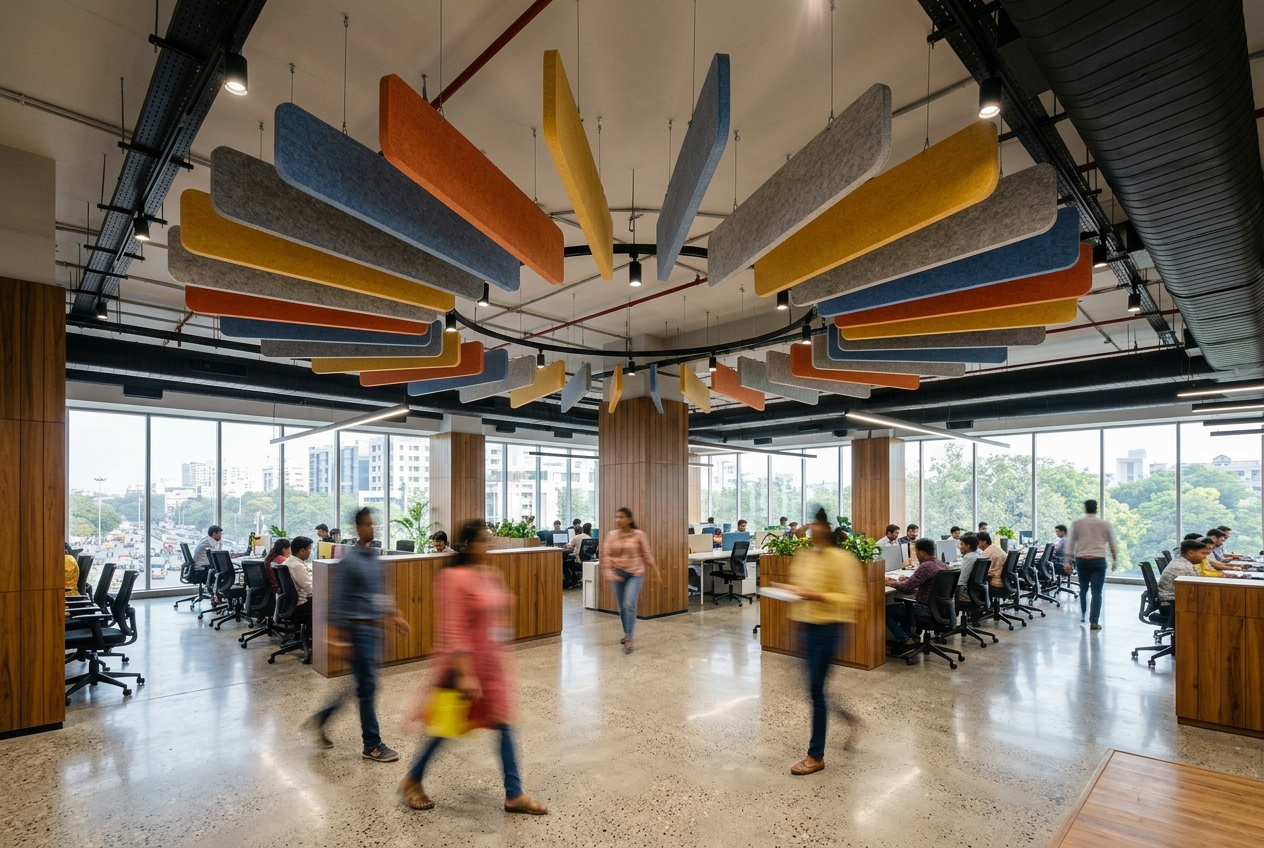

The effectiveness of acoustic treatment in modern interiors comes down to a balance between performance and design. Spaces today require more than just sound control; they need solutions that work technically while seamlessly integrating into the room’s visual language. Acoustic Ceiling Clouds address this challenge by absorbing excess noise, reducing reverberation, and enhancing speech clarity without compromising the space’s look and feel.
1. Placement of Acoustic Ceiling Clouds
Understanding Room Acoustics and Problem Areas
Every space presents unique acoustic challenges influenced by size, shape, occupancy, and surface materials. Before installation, conduct a room analysis to identify areas where excessive echo or noise accumulates; these ‘hotspots’ typically occur above open workspaces, meeting zones, or congregation areas. Addressing these zones with targeted Acoustic Ceiling Cloud placement results in significant sound absorption.
Strategic Positioning for Effective Sound Absorption
Avoiding Interference with Structural Elements
It’s essential to avoid conflicts with existing structural components like beams or columns. Ensure installations do not obscure essential pathways or impair overhead access, maintaining both safety and accessibility. Collaborate with structural consultants to preserve ceiling integrity, especially when accommodating multiple panels or sizable absorbers.
2. Size and Scale of Acoustic Ceiling Clouds
Matching Cloud Size to Room Dimensions and Usage
Precision-Cut Polyester Fibre Acoustic Panels can be trimmed to fit a room’s layout exactly. Custom cutting lets you change panel size, shape and spacing for anything from subtle integration to bold ceiling features. In short, Bespoke Suspended Acoustic Clouds made from these panels can be made to order as single elements or layered ceiling arrangements, improving a room’s appearance while still providing effective sound absorption.
Balancing Coverage for Sound Control Without Overpowering the Space
While extensive coverage enhances acoustic control, it’s equally vital to prevent aesthetic overcrowding. Excessive cloud coverage may create a visually ‘heavy’ ceiling and diminish room openness. Strive for a balance between functional absorption and a clean, minimalist look to maintain both sound quality and architectural harmony.
3. Height and Mounting Options
Optimal Hanging Height for Sound Absorption Efficiency
Types of Mounting Systems and Their Impact on Performance and Aesthetics
Mounting systems range from direct-mount brackets for low-clearance spaces to wire-hung or rod-suspended options for dramatic visual effects and optimal acoustic coverage. The choice impacts both absorption efficiency and room character. Select mounting hardware that complements your interior theme and provides practical maintenance access.
4. Spacing Between Acoustic Ceiling Clouds
Impact of Spacing on Sound Diffusion and Room Ambience
Determining Appropriate Gaps for Acoustic Effectiveness
Spacing between panels directly influences how sound waves are absorbed or diffused. Uniform or carefully staggered gaps (typically between 150mm and 300mm) can enhance overall coverage, reducing persistent echoes and ensuring an even acoustic response throughout the space. Amazone By Furnitech’s modular solutions make it possible to tailor spacing for targeted performance.
5. Shape and Design Variations
Common Shapes: Rectangular, Circular, Custom Designs
To support this flexibility, as mentioned earlier, the solutions developed using Precision-Cut Polyester Fibre Panels allow shapes to be refined with accuracy and consistency. For more distinctive interiors, Custom Suspended Acoustic Clouds can be designed to move beyond standard geometries, creating ceiling features that are both acoustically effective and visually expressive. This approach makes it possible to balance performance with design, whether the goal is uniform coverage or a signature ceiling statement.
Influence of Shape on Acoustic Performance and Visual Appeal
While shape has a modest bearing on absorption coefficients, it dramatically influences how panels interact with sound waves and visual perception. Rounded or undulating shapes can facilitate even sound diffusion and add organic visual interest, whereas geometric forms support modular repetition and modern aesthetics. Selection should reflect both acoustical and stylistic priorities for the project.
6. Integration with Lighting Systems
7. Compatibility with HVAC and Other Ceiling Fixtures
Avoiding Airflow Disruption and Maintaining System Efficiency
Planning Around Sprinklers, Vents, and Sensors
TL;DR
_ _
Considering acoustic treatment for your space?
Furnitech supplies and installs acoustic panels and ceiling tiles across India.
Call +91-9727092998 or send your requirements.
Related Articles