A corporate office can look perfectly designed and still sound exhausting. Glass partitions, exposed ceilings, hard flooring, large open work areas, and constant conversations can create a space where every sound travels farther than it should. The result is not necessarily excessive noise in the simple sense. It can be poor speech clarity, distracting conversations, reverberation, or difficulty concentrating. That is why selecting acoustic panels for a corporate office should start with understanding how the space is used, rather than with a list of products.
Amazone By Furnitech has been working in the ceiling and room acoustics industry for almost two decades, with more than 1,500 commercial clients using our acoustic panels and ceiling tiles. Our projects span commercial offices, restaurants, cafes, hospitals, clinics, institutional buildings, auditoriums, theatres, and educational facilities. This breadth of experience is valuable when specifying office acoustics because different environments present very different acoustic challenges.
Think About the Office as Zones, Not One Room
A corporate office rarely has the same acoustic requirements throughout the entire space. Different zones have different activity levels, sound sources, layouts, and design constraints, meaning the acoustic panels suited to one area may not work as well in another.
Open Work Areas: Constant conversations, calls, keyboard sounds, and movement can allow sound to travel across large workstation areas. Acoustic panels should help control this while fitting naturally into the open-office layout.
Conference Rooms: Good speech clarity is important for meetings and virtual calls. Acoustic panels can reduce reflections and reverberation, making conversations easier to understand.
Reception Areas: Glass, stone, tile, and other hard finishes can increase reflections. Acoustic panels should provide sound absorption while complementing the interior design.
Corridors and Common Areas: Hard finishes and frequent movement can create reflections and allow sound to travel between office zones. Acoustic panels can help manage these effects.
High-Ceilinged Areas: Larger ceiling volumes can allow sound to linger. When walls are occupied by glass, furniture, branding, or other finishes, the ceiling can become an important surface for acoustic treatment.
Looking at each office zone individually makes choosing the right acoustic panels more practical. Instead of using one solution throughout the workplace, the specification can be matched to each area’s acoustic needs, available surfaces, and visual requirements.
The office before
Consider an open-plan corporate work floor with rows of workstations, glass meeting rooms, and hard wall surfaces. The ceiling may already be occupied by lighting, HVAC, services, or other elements, leaving limited scope for additional ceiling treatment. However, selected wall areas may still be available for acoustic treatment. This is where wall-mounted acoustic panels can be practical. Instead of changing the entire ceiling, selected walls can provide sound absorption closer to areas where conversations and reflections are more noticeable.
The change
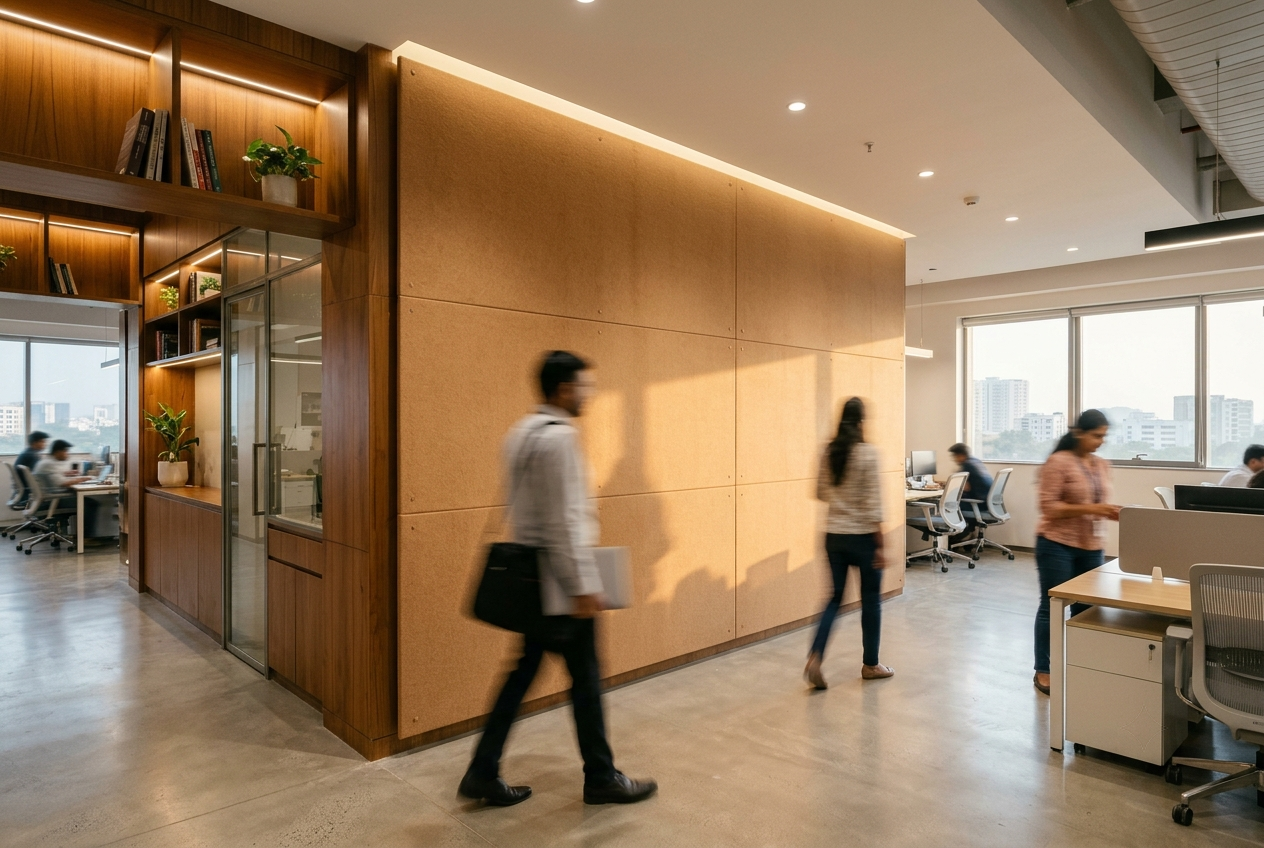
Amazone By Furnitech‘s Polyester Fibre Acoustic Panels are available in 9 mm and 12 mm thicknesses, with NRC values up to 0.70 and 0.85 respectively. The 2440 x 1220 mm panels are available in 45 shades in 9 mm and 27 shades in 12 mm, with CNC customisation for different shapes and layouts. This flexibility can work well across open work areas, reception zones, breakout areas, and other wall surfaces where acoustic treatment needs to complement the existing interior. Amazone By Furnitech also offers CNC-cut PET acoustic panels for geometric patterns, curves, decorative perforations, and other custom forms, allowing acoustic treatment to become part of the office’s visual design.
The office after
Rather than treating every wall equally, panels can be placed on specific surfaces where they are most useful. Open work areas can gain additional absorption without significantly changing the ceiling, while reception and breakout zones can use customised shapes and colours to complement the interior. For corporate offices, polyester fibre panels can therefore provide a flexible wall-based acoustic solution with options for colour, shape, and coverage.
The office before
Consider a conference room with glass partitions, painted walls, hard flooring, and a table surrounded by participants. While the room may look polished and function well, these hard surfaces can create noticeable sound reflections. During meetings or video calls, reflected sound can affect speech clarity and make voices harder to understand. The same issue can occur in cabins, training rooms, and smaller corporate discussion areas where clear communication is important, but soft or sound-absorbing surfaces are limited.
The change
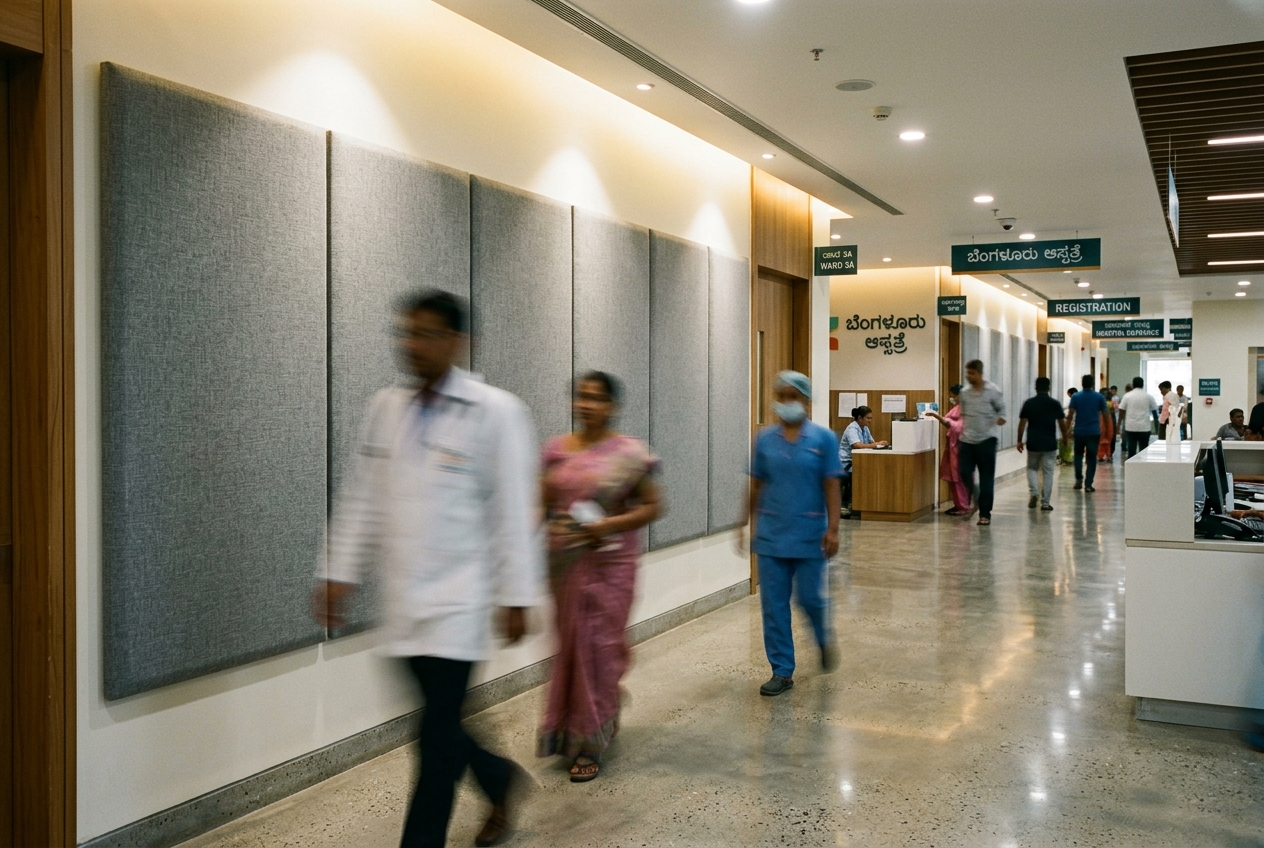
Amazone By Furnitech’s Fabric Wrapped Acoustic Panels feature a 25 mm high-density fibreglass acoustic core. They are available in multiple size formats, with 12 jute-finish shades and an NRC of up to 0.95. Their acoustic performance and fabric finishes make them suitable for office areas where sound control needs to complement the interior design. Panels can be placed on selected wall surfaces based on the room layout and reflective areas.
The office after
Strategically placed panels can help reduce unwanted reflections and create a more controlled acoustic environment in conference rooms, cabins, and training rooms. This can support clearer communication during face-to-face meetings and virtual calls while maintaining a finished interior appearance. For corporate offices, fabric-wrapped acoustic panels can therefore be considered for communication-focused zones where high sound absorption and interior integration are both important.
The office before
Consider a large open-plan corporate office with a high ceiling, rows of workstations, exposed services, and limited usable wall space. With conversations, calls, and movement happening across the floor, sound can travel through the open space and linger within the larger ceiling volume. When walls are already occupied by glass partitions, furniture, branding, or other finishes, adding more wall-mounted acoustic treatment may not be practical. The ceiling can therefore become an important surface for controlling sound within the occupied space.
The change
Amazone By Furnitech’s Acoustic Baffles are made from high-density fibreglass wool and are available in a 2400 x 300 mm size, with a thickness of 30 mm and an NRC of up to 0.90. Supplied in white, they can be suspended from the ceiling to add sound-absorbing surfaces where wall treatment may not be practical. Amazone By Furnitech also offers customised baffles for projects where the size, arrangement, or visual treatment needs to follow a specific ceiling concept. This allows the acoustic treatment to become part of the office’s overall interior design.
The visual difference matters too
In a large open-plan office, baffles do not necessarily need to be hidden. Their suspended vertical arrangement can create a deliberate rhythm across the ceiling while adding acoustic absorption within the occupied space. This makes acoustic baffles relevant for large open work areas, high-ceilinged offices, training areas, and collaboration zones, particularly where wall surfaces are limited and the ceiling provides a more practical location for acoustic treatment.
The office before
Consider a reception area, collaboration zone, or open work area with an exposed ceiling, visible services, and generous floor-to-ceiling height. A conventional suspended ceiling may not suit the design, but the open volume can still allow sound to reflect and linger. In these areas, acoustic treatment does not necessarily need to cover the entire ceiling. Selected overhead zones can be treated while keeping lighting, HVAC, and other ceiling services visible and accessible.
The change
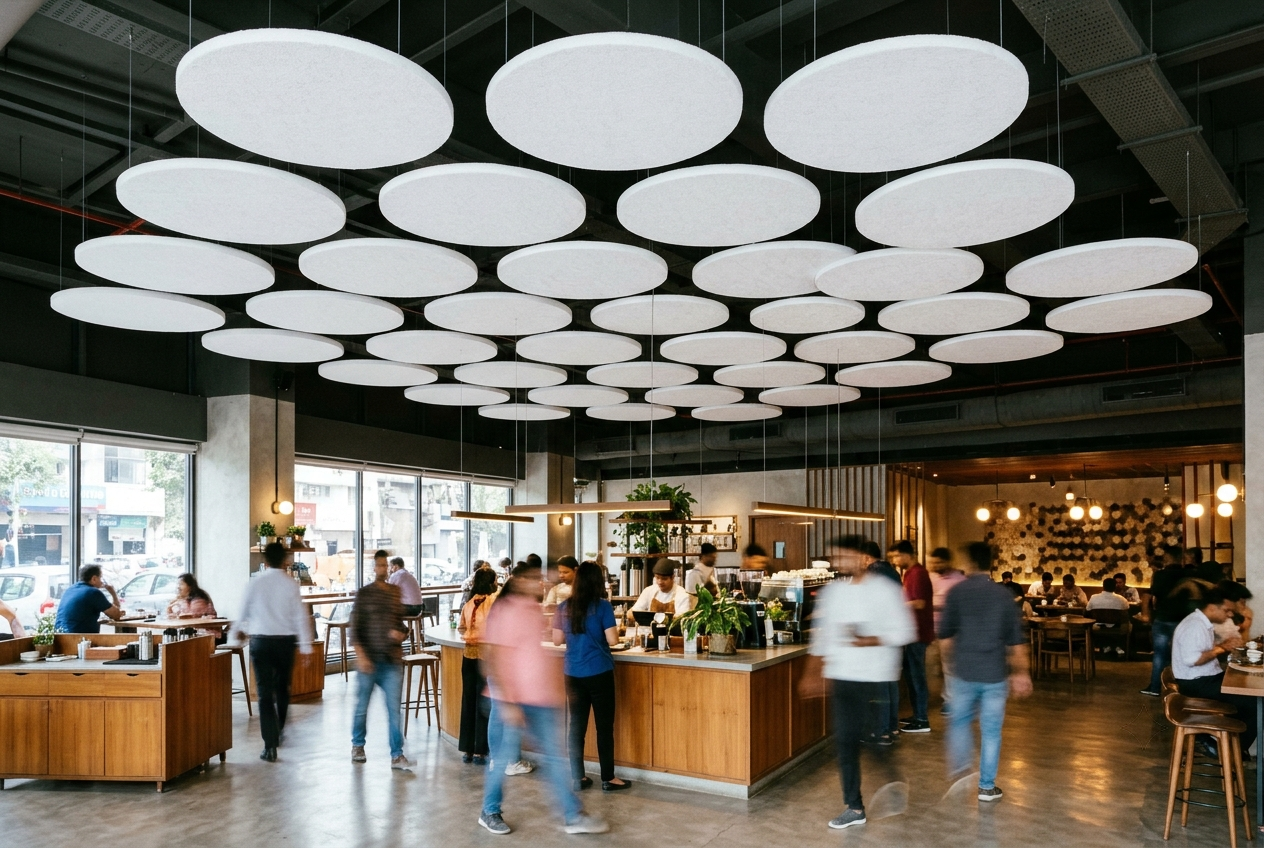
Amazone By Furnitech’s Acoustic Ceiling Clouds combine fibreglass and polyester fibre in a 30 mm thickness, with an NRC of up to 0.95. Circle and hexagon options are available in 600, 900, and 1200 mm sizes, along with square, rectangle, wave, and curved forms. Amazone By Furnitech also provides Custom Acoustic Ceiling Clouds with CNC or hand-cut shaping to suit the office layout, colour scheme, and ceiling requirements. This gives designers flexibility when standard cloud shapes do not fit the intended design.
That creates a different office strategy
In reception areas, collaboration zones, open work areas, or corporate lounges, ceiling clouds can be grouped above occupied areas rather than covering the entire ceiling. Their suspended format adds sound-absorbing surfaces while keeping the overall ceiling visually open. This makes acoustic ceiling clouds particularly relevant when an office needs targeted sound absorption without giving up an exposed or visually open ceiling.
A Better Office Acoustic Checklist
Before approving the final acoustic specification, it is worth checking five things:
1. Where are the reflections coming from?
Walls, ceilings, glazing, flooring, and other hard surfaces can affect how sound behaves differently within the same office. Identifying the main reflective surfaces helps determine where acoustic treatment can have the most practical impact.
2. Where can absorption realistically be installed?
The most suitable acoustic surface on paper may not be practical once lighting, HVAC, furniture, branding, glass partitions, or other architectural elements are considered. The available wall and ceiling surfaces should be assessed before finalising the treatment.
3. Is the problem reverberation, speech clarity, or sound transfer?
These are related but different acoustic requirements. Absorption can help control reflections and reverberation within a room, while sound transfer between rooms may require attention to partitions, doors, ceilings, and other building elements.
4. Will the office layout change?
Corporate workplaces are often reconfigured as teams, departments, and space requirements change. Where flexibility is important, a modular or repositionable acoustic approach can make future changes easier to accommodate.
5. Does the acoustic treatment belong visually in the space?
Acoustic treatment is part of the interior once it becomes visible. Colours, shapes, finishes, and installation patterns should work with the office’s architectural identity rather than compete with it.
So, Which One Makes Sense?
There is no single acoustic panel that fits every corporate office. The better approach is to match the solution to the office zone, sound behaviour, and surfaces available for treatment.
Polyester fibre acoustic panels make sense where wall surfaces are available and flexibility in colour, coverage, and custom shapes is important. They can work well in open work areas, reception zones, and breakout areas.
Fabric-wrapped acoustic panels are suited to communication-focused spaces such as conference rooms, cabins, and training rooms, where controlling reflections and supporting speech clarity are priorities. Their fabric finish also suits more finished interiors.
Acoustic baffles are relevant for large open work areas and high-ceilinged offices where wall space is limited. Suspended from the ceiling, they add sound absorption while creating a defined visual element.
Acoustic ceiling clouds suit offices where the ceiling needs to remain visually open. They can be positioned selectively above reception areas, collaboration zones, open work areas, and other occupied spaces. The right specification connects the product, surface, sound problem, and how the space is used.
A Practical Way to Approach the Shortlist
Acoustic treatment works best when planned alongside the office layout, ceiling, furniture, lighting, services, and future changes. The acoustic problem and available wall or ceiling surfaces should guide the selection rather than applying one solution throughout.
Amazone By Furnitech offers polyester fibre and fabric-wrapped panels, acoustic baffles, ceiling clouds, CNC-cut PET panels, and custom acoustic ceiling clouds. Our experience across commercial, institutional, theatre, auditorium, and suspended-ceiling projects can help match solutions to different office zones. Contact us to discuss your office requirements and find suitable acoustic panels for your space.
TL;DR
Corporate offices have different acoustic requirements depending on how each zone is used. Polyester fibre panels work well for open work areas, fabric-wrapped panels help control reflections in meeting rooms, while acoustic baffles and ceiling clouds suit large spaces and high or exposed ceilings. The right acoustic panels should be selected based on sound issues, available wall and ceiling surfaces, interior design, and future layout changes to create a more comfortable and functional workplace.
_ _
Considering acoustic treatment for your space?
Furnitech supplies and installs acoustic panels and ceiling tiles across India.
Call +91-9727092998 or send your requirements.
Related Articles