Fine dining is one of those environments where acoustic products can play an important role in the guest experience without anyone consciously noticing it. A table conversation should feel private enough to be comfortable. Background music should support the atmosphere rather than compete with speech. Cutlery, chairs, kitchen activity, and conversations from neighbouring tables should not accumulate into a constant layer of noise. Well-selected acoustic products help manage these sound conditions while maintaining a comfortable dining environment.
At the same time, a fine-dining restaurant rarely wants to look acoustically treated. Designers are often working with stone, glass, timber, metal, decorative lighting, and carefully selected furniture, all of which contribute to the visual identity but can also create reflective surfaces. This makes the selection and placement of acoustic products particularly important. The question isn’t simply, ‘Which acoustic panel absorbs the most sound?’ It is also about where acoustic treatment should happen, how visible the acoustic products should be, and which materials fit the character of the dining space.
Start With the Dining Experience
A restaurant can have several acoustic conditions under the same roof. A main dining room may have dozens of simultaneous conversations. A private dining room may have fewer people but require greater conversational privacy. A chef’s table may sit closer to the kitchen and service activity. A hotel restaurant may have a large ceiling volume that allows sound to travel farther. A high-end lounge may combine conversation, music, and dining in one space.
That means acoustic products and their placement should respond to the behaviour of each zone. For example, wall-mounted acoustic panels close to seating can be useful where conversations are the dominant sound source. Acoustic ceiling products become more relevant when the room has a large hard ceiling or a generous volume. In a private dining room, acoustic treatment can be integrated into feature walls rather than spread throughout the room. The choice of acoustic products should therefore consider both the sound conditions and the visual character of each dining area.
This way of thinking also reflects the kind of practical acoustic work Amazone By Furnitech has accomplished. Amazone By Furnitech has been working in the ceiling and acoustic industry for more than two decades, with projects ranging from Gujarat University and Gujarat High Court auditoriums to theatres across several Indian states. That experience matters because hospitality spaces have to balance acoustic performance with the architecture around them. Acoustic products that work technically but disrupt the intended atmosphere are not necessarily a good restaurant solution.
When the Walls Need to Contribute Without Looking Like Acoustic Walls
In an intimate dining room, walls are often highly visible, carrying artwork, mirrors, timber detailing, upholstery, or decorative finishes. This makes the choice of wall-mounted acoustic products particularly important.
Polyester fibre acoustic panels are useful when acoustic treatment needs to become part of the visual language. They can be cut into patterns, curves and other forms rather than being limited to standard rectangular panels. For fine-dining projects, they can work well around feature walls, seating zones, counters or selected ceiling areas where colour and geometry are already part of the design.
Amazone By Furnitech’s Polyester Fibre Acoustic Panels are available in 2440 x 1220 mm sheets in 9 mm and 12 mm thicknesses, with an NRC of up to 0.70 and 0.85 respectively. They come in 45 colour options for 9 mm and 27 for 12 mm and can be CNC-cut into customised forms. CNC-Cut PET Panels service from Amazone By Furnitech extends this further, allowing geometric patterns, organic curves, decorative perforations, logos and other CNC-ready designs.
When the Acoustic Treatment Should Feel Like Upholstery
Think of a premium hotel restaurant with upholstered seating, timber walls, curtains and warm lighting. Here, a fabric-wrapped panel can feel more natural because the acoustic treatment shares the visual language of the soft furnishings.
These acoustic products can also be positioned strategically behind banquettes or along selected walls rather than covering every available surface. This allows the designer to introduce sound absorption while keeping the dining room visually balanced. In a private dining room, fabric-wrapped panels can be useful around the perimeter, particularly where hard wall finishes would otherwise cause conversations to reflect back towards the table.
Amazone By Furnitech’s Fabric Wrapped Acoustic Panels use a high-density fibreglass acoustic core, are 25 mm thick and have a stated NRC of up to 0.95. They are available in 600 x 600 mm, 1200 x 600 mm, 1800 x 600 mm, 2100 x 600 mm and 2400 x 600 mm formats, with 12 jute-finish shades.
The Ceiling Is Often the Biggest Untreated Surface
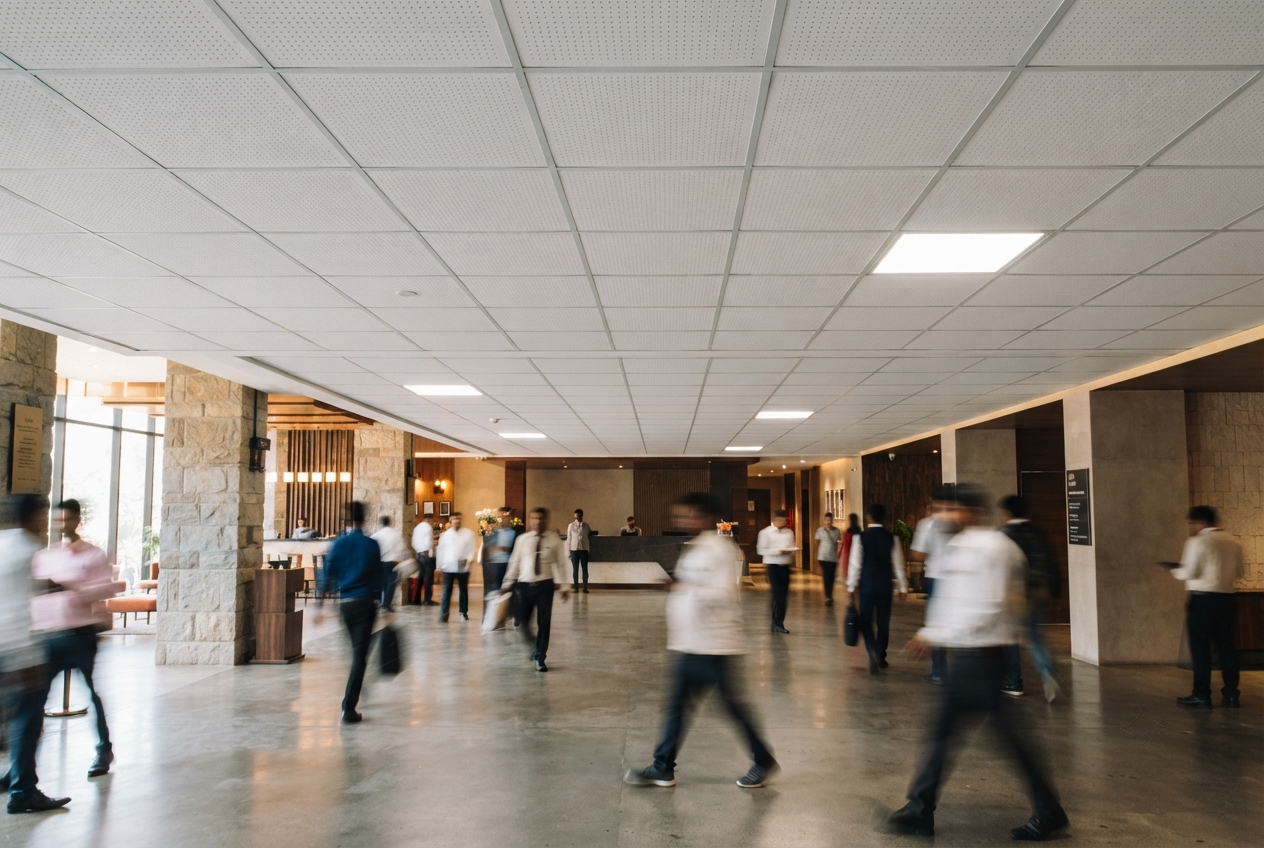
One of the easiest things to overlook when selecting acoustic products for restaurants is the ceiling. A beautiful ceiling can also be an effective sound reflector. This becomes particularly noticeable in hotel restaurants, large premium dining rooms, and lounges with generous ceiling heights. Sound from multiple tables travels upward, reflects, and returns to the room, contributing to overall loudness and reverberation.
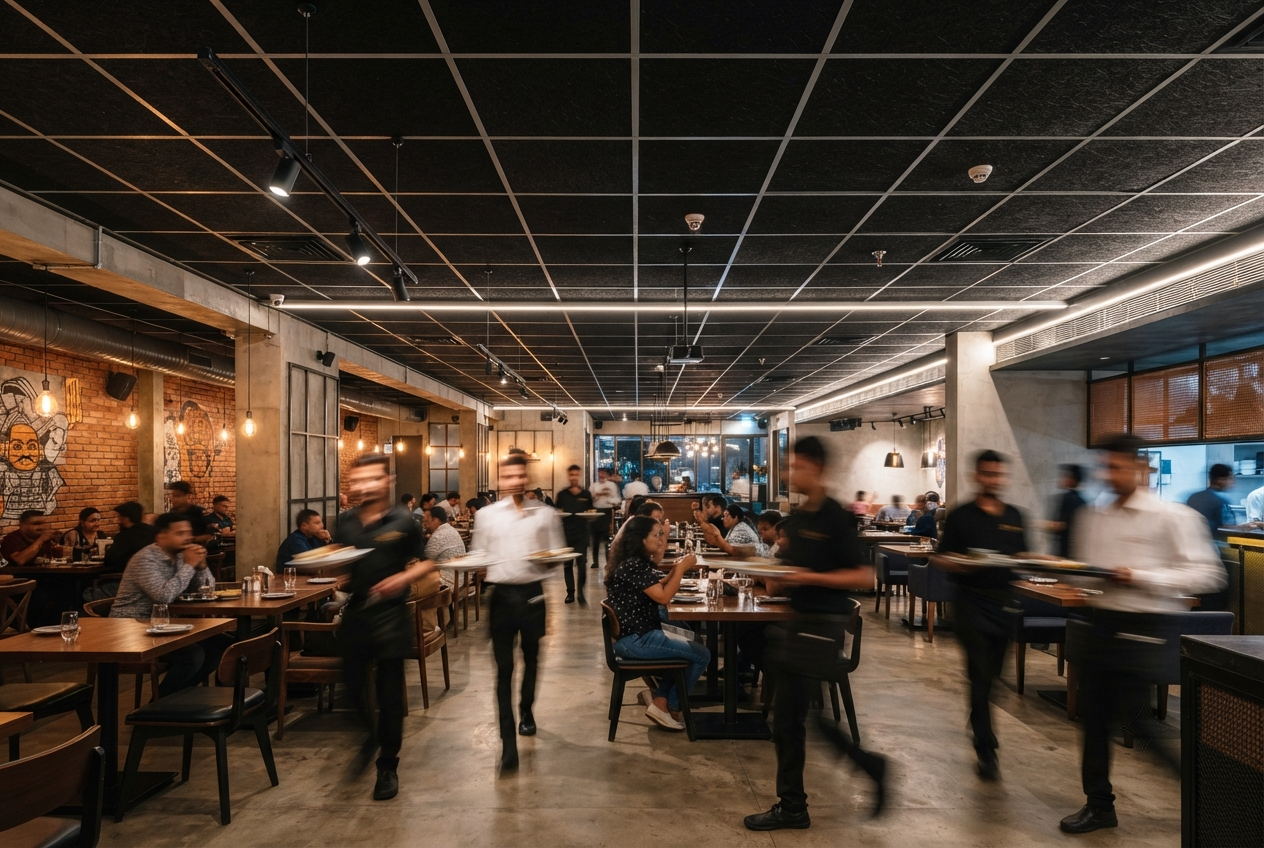
This is where black fibre glass wool acoustic ceiling tiles can be an interesting design choice. Their black finish allows the ceiling to visually recede, which can work well in darker restaurant interiors where lighting, decorative fixtures, and furniture are intended to draw attention. These acoustic products can therefore provide significant sound absorption while keeping the visual treatment relatively controlled.
Amazone By Furnitech’s Black Fibre Glass Wool Acoustic Ceiling Tiles are made from high-density fibre glass wool using 100% recycled content. They are available in 600 x 600 mm and 1200 x 600 mm formats, with 15 mm and 20 mm thickness options, and offer an NRC of up to 0.95. Designed for standard grid installation, these acoustic ceiling products are also lightweight and fire-resistant.
When You Don't Want to Fill the Entire Ceiling
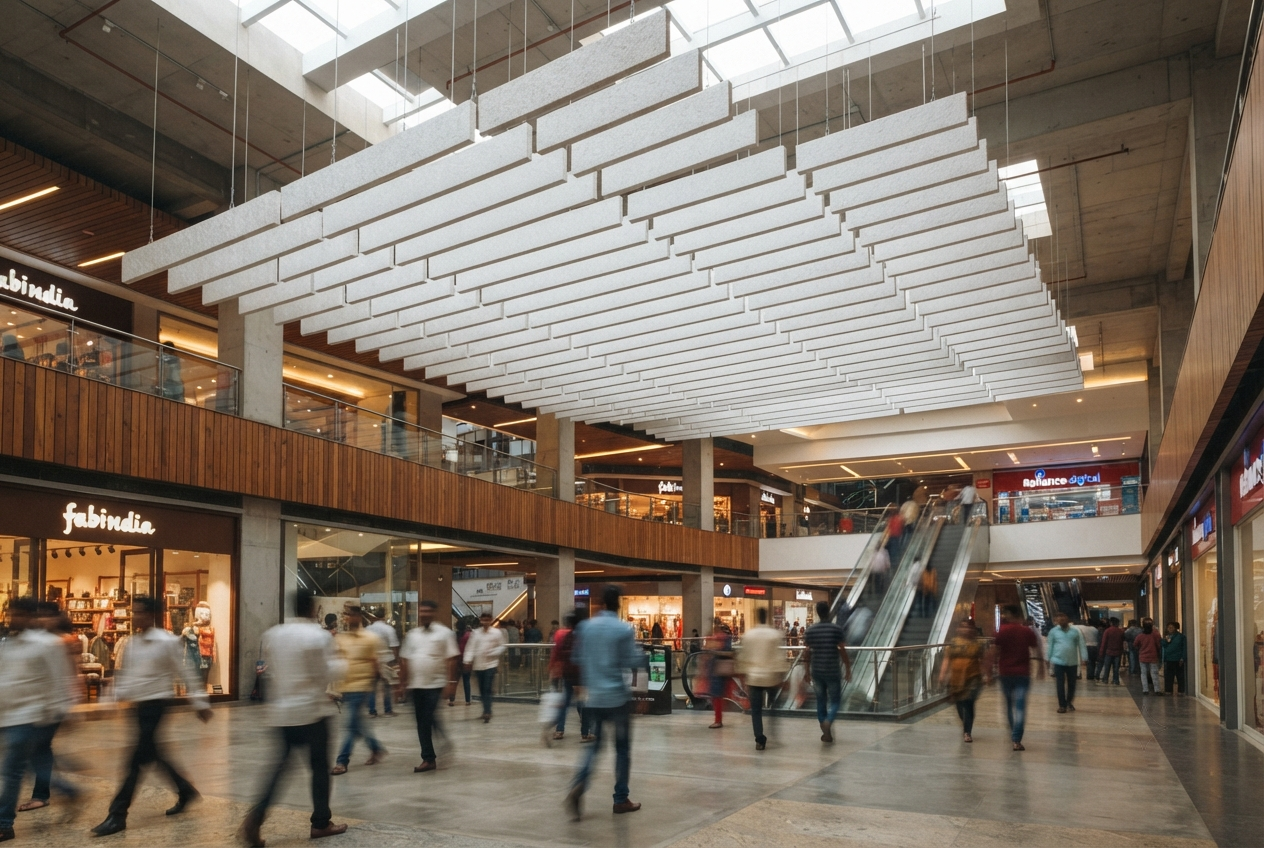
Sometimes the existing ceiling is too important to cover. A restaurant may have exposed services, decorative lighting, a feature ceiling, a high slab, or an architectural structure that the designer wants to retain. That is where acoustic ceiling clouds offer another approach. Instead of treating the entire ceiling plane, these suspended acoustic products can be placed above dining areas or other locations where sound concentration is expected. This creates a useful visual connection between acoustic treatment and the table layout.
Amazone By Furnitech’s Acoustic Ceiling Clouds are available in circles, waves, squares, curves, hexagons, and rectangles. Sizes include 600, 900, and 1200 mm diameter options, along with 1200 x 600 mm, 1200 x 1200 mm, and 2700 x 1200 mm formats. Thicknesses include 30 mm and 40 mm, with a stated NRC of up to 0.95.
The suspended format allows acoustic treatment to be introduced without replacing the entire ceiling, while keeping lighting, ducting, and other elements visible. Amazone By Furnitech also offers a Custom Acoustic Ceiling Clouds service, with shape, size, thickness, and colour developed around the ceiling plan. The service uses fibreglass and polyester fibre options, with an NRC of up to 0.95 depending on the selected material, thickness, and design.
Don't Make the Restaurant Too Quiet
This is an important distinction in fine dining. The goal of selecting acoustic products is not necessarily to create silence. A completely dead room can feel unnatural, while an overly reverberant room can make conversations tiring. What most dining environments need is controlled ambience.
The acoustic strategy should allow some of the restaurant’s energy to remain. Background music should still be perceptible, and conversations should feel natural. The room should retain the atmosphere expected from a lively dining environment without allowing sound to accumulate excessively. That is why the quantity and placement of acoustic products matter as much as the products themselves.
A combination might involve fabric-wrapped acoustic panels around selected seating areas, PET acoustic panels at feature locations, and acoustic ceiling clouds over a larger dining zone. Another restaurant might use black fibre glass wool acoustic ceiling tiles across the ceiling while keeping the walls almost entirely decorative. There is no universal formula because room geometry, finishes, occupancy, and the intended atmosphere vary from one project to another. The right combination of acoustic products should always be based on the specific requirements of the dining space.
Think About the Restaurant After Opening Night
Acoustic products should also be evaluated under actual operating conditions. An empty restaurant can sound completely different from a fully occupied one. Once guests arrive, conversations, cutlery, music, and movement all contribute to the acoustic environment.
This is why it helps to consider the dining layout when specifying acoustic products and planning their placement. A long row of tables, separate booths, a central bar, a private dining room, and a chef’s counter can all create different sound paths. Selecting the right combination of acoustic panels and ceiling products according to these conditions helps maintain a comfortable dining atmosphere even during busy service hours.
A Practical Shortlist for Fine-Dining Projects
When comparing acoustic products for a hospitality project, the starting point can be fairly simple:
- Polyester fibre panels make sense when acoustic treatment needs colour, pattern and custom shapes.
- Fabric-wrapped panels fit interiors where acoustic treatment should visually connect with upholstery and other soft finishes.
- Black fibre glass wool tiles can work when substantial ceiling absorption is needed but the ceiling should visually recede.
- Acoustic clouds become useful when the existing ceiling needs to remain visible or when absorption needs to be concentrated above specific dining zones.
The important part is not selecting one product for the entire restaurant. It is understanding where sound is building up and choosing the treatment that fits both that acoustic problem and the intended guest experience.
Balancing Acoustics and Interior Design
For fine-dining restaurants, hotel restaurants, private dining rooms, and premium lounges, acoustic products should be considered alongside lighting, furniture, finishes, and spatial planning rather than after the interior design is complete. Good acoustic treatment should do its job quietly. Guests should notice that conversations are comfortable and the room feels balanced, without the acoustic products dominating the interior.
Amazone By Furnitech is worth considering when shortlisting acoustic products for hospitality projects. Its range covers wall-mounted PET acoustic panels and fabric-wrapped panels, along with ceiling-based black fibre glass wool acoustic tiles and suspended acoustic ceiling clouds. The available formats, colours, shapes, and customisation options give designers several ways to integrate acoustic treatment into the character of the dining space rather than forcing the interior to accommodate the products. Contact us to discuss your restaurant’s acoustic requirements and explore suitable acoustic products for your dining space.
TL;DR
Right acoustic products for fine-dining restaurants involve balancing sound absorption with the overall interior design and guest experience. Polyester fibre panels offer colour and customisation, fabric-wrapped panels complement soft furnishings, black fibre glass wool ceiling tiles provide ceiling absorption, and acoustic clouds treat selected areas without covering the entire ceiling. The right combination depends on the restaurant’s layout, ceiling height, materials, occupancy, and desired ambience. Planning acoustic treatment around these factors helps create a comfortable dining environment without compromising the restaurant’s visual appeal.
_ _
Considering acoustic treatment for your space?
Furnitech supplies and installs acoustic panels and ceiling tiles across India.
Call +91-9727092998 or send your requirements.
Related Articles