A home theatre needs more than basic sound absorption. Reflections from walls, ceilings, and other surfaces can affect dialogue clarity, surround imaging, and bass response. Too little treatment can make a room sound harsh and echoey, while too much can make it feel flat and lifeless.
After more than twenty years of working on ceiling and acoustic projects across home theatres, multiplexes, auditoriums, and commercial spaces, we have developed a practical understanding of how sound behaves in different environments. This experience has taught us that effective acoustic treatment is not a one-size-fits-all solution. Every space requires an approach tailored to its design, usage, and acoustic requirements.
Having delivered acoustic panel installations across projects throughout India, we bring this understanding to every project we undertake. Our long-standing association with Rajhans Cinemas, a repeat customer for almost a decade, is a testament to the consistency and reliability they have come to expect from our work.
This approach involves selecting the right type, thickness, size, and finish of acoustic panel for each application, rather than using the same panel across every surface. The final treatment should also complement the room’s architecture, seating arrangement, and speaker positions.
Acoustic Panel Options for Home Theatres
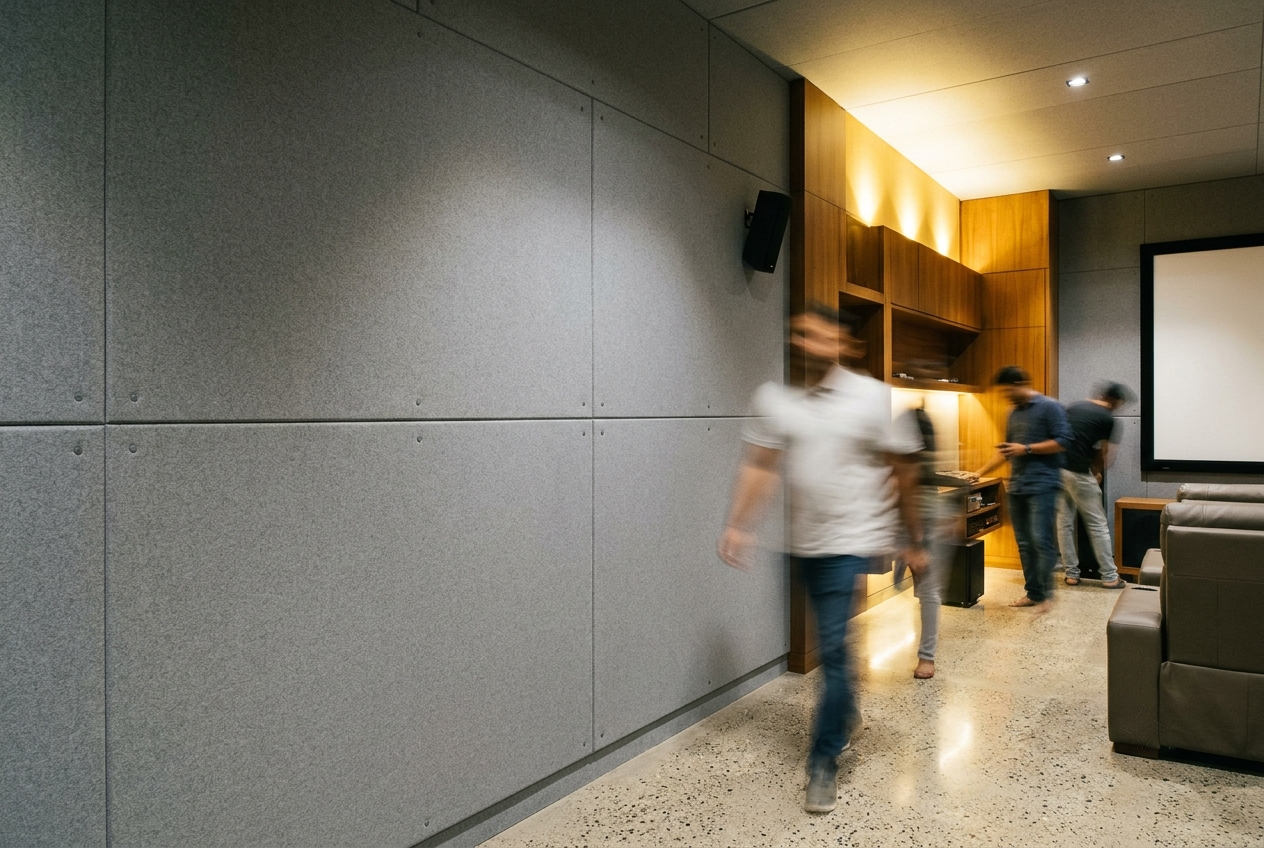
These can be useful around first-reflection points on the side walls, the spots where sound from the speakers bounces once before reaching the listening position, since reflections arriving just after the direct sound can blur dialogue and imaging. A fibreglass core wrapped in fabric handles this type of absorption well while still looking like part of a living space rather than a technical fitting. This tends to matter in a room that is often part of a home rather than a dedicated commercial space.
Amazone By Furnitech’s fabric-wrapped acoustic panels comes in a 25 mm thickness with fibreglass core that rated at up to NRC 0.95, with a jute-style finish available in 12 shades. The range offers multiple colour and size options, allowing the panels to integrate neatly into a theatre without making the acoustic treatment feel overly technical or out of place.
Large, flat walls, with the rear wall behind the seating being a common example, are often where a large-format board is useful. Since the rear wall faces the screen directly, it can build up flutter echo over the length of the room. A large-format board can help cover more surface with fewer joins than a smaller panel would.
Amazone By Furnitech’s perforated gypsum acoustic board comes in a standard size of 2440 x 1200 mm with 12 mm thickness. The product also can be installed with a glass wool backing behind it to improve absorption further, which is worth considering for any wall where additional acoustic performance is useful.
Ceilings matter more in home theatres than in most other rooms, particularly where overhead speakers are part of the setup. Since these rooms are often kept dark or dimly lit as part of the design, a black fibre glass ceiling tile tends to suit this kind of space better than a standard white tile would.
Amazone By Furnitech’s black fibre glass wool acoustic ceiling tiles are rated at up to NRC 0.95, made from fibreglass wool, and fits into a standard T-grid. This means the acoustic performance and blacked-out look can come from the same tile, rather than requiring a separate finish to be applied afterward.
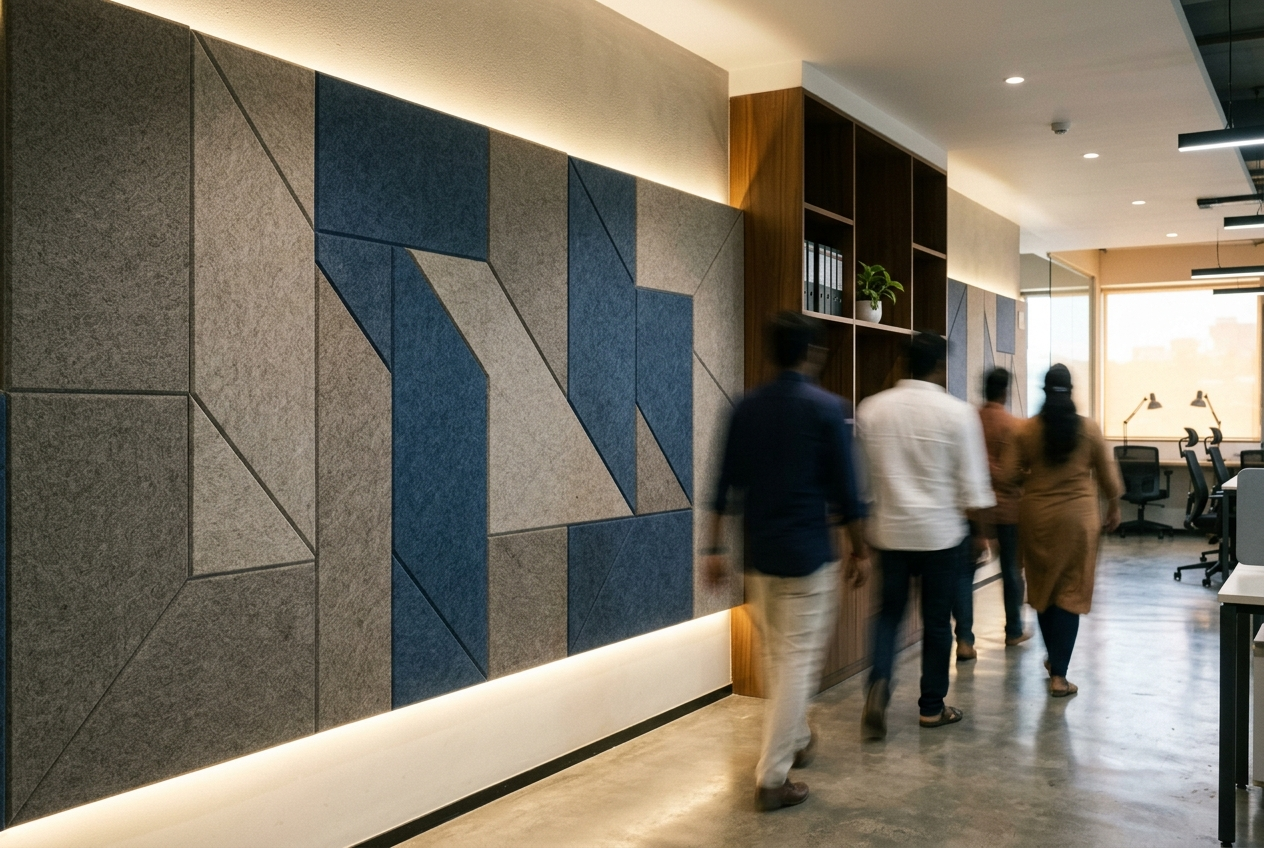
For larger wall areas that extend beyond the screen or main seating position, such as a side wall further back in the room, polyester fibre panels can provide an effective way to combine acoustic treatment with broader design coverage. Their application across larger wall areas can help extend acoustic treatment beyond the main listening zone while maintaining a consistent approach to the room’s overall design.
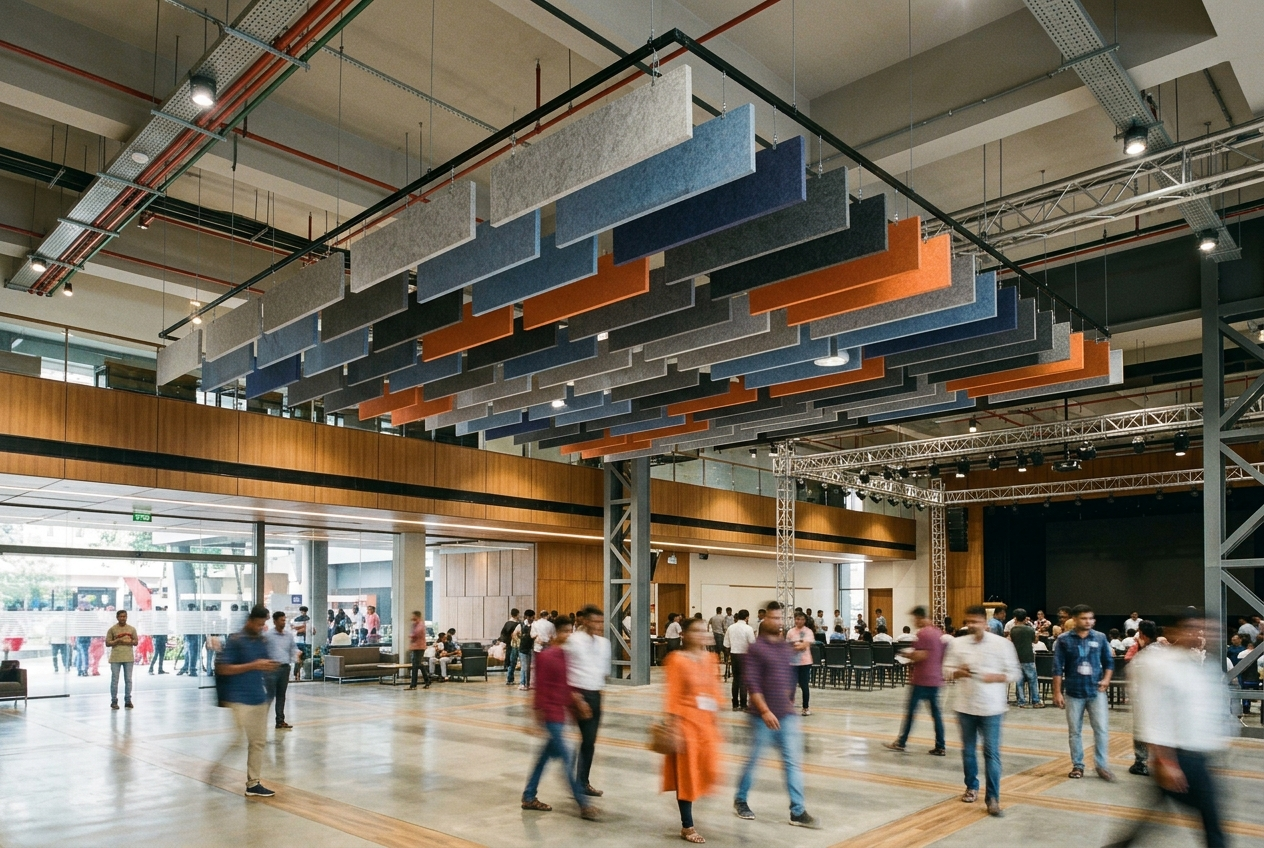
Amazone By Furnitech’s polyester fibre acoustic panels are available in 9 mm (NRC up to 0.70) and 12 mm (NRC up to 0.85), across a wide range of colours, making them a straightforward option for covering more general wall space. For projects that call for something more distinctive, they also offer CNC-cut PET acoustic panels, allowing the finished designs to be precisely cut into custom shapes, patterns, perforations, and contours. This makes it possible to use the same acoustic material as a more deliberate architectural or decorative feature rather than keeping it as a standard rectangular panel.
Before finalising anything
Treat acoustic panel type as a starting point, not a fixed placement rule. The architect or interior designer working on the room is best placed to decide exactly where each acoustic panel goes, based on the room’s specific dimensions and layout.
Confirm the seating position first, since first-reflection points are calculated from where people actually sit relative to the speakers, rather than simply being placed symmetrically along the room.
Don’t treat every surface with maximum absorption, since an over-treated room can lose the sense of space that makes surround sound feel immersive rather than flat.
Coordinate with whoever is installing the AV system, since speaker placement, screen size, and any in-ceiling speakers used for height channels can all affect where panels can actually go.
Getting the Balance Right
The best acoustic treatment is the one that improves the way a home theatre sounds without making the room feel like an acoustically treated space. Good treatment should support clear dialogue, controlled reflections, and a balanced surround experience while still fitting naturally into the room’s overall design. That balance becomes easier to achieve when the treatment is planned alongside the seating, speakers, lighting, and finishes rather than added as an afterthought.
For a project where different areas call for different acoustic solutions, Amazone By Furnitech offers a useful range to work from, including fabric wrapped acoustic panels, perforated gypsum acoustic boards, black fibre glass wool acoustic ceiling tiles, polyester fibre acoustic panels, and CNC-cut PET acoustic panels. The advantage is not simply having several products to choose from but being able to select finishes and formats that suit the acoustic requirements and visual character of each part of the theatre. If you’re planning a home theatre and need help choosing the right acoustic panels for your space, Contact Us to explore suitable products and design options.
TL;DR
Choosing the best acoustic panels for a home theatre involves balancing sound absorption, dialogue clarity, surround sound performance, and interior design. Fabric-wrapped acoustic panels help control first reflections, perforated gypsum boards suit larger wall areas, and black fibre glass wool ceiling tiles complement dark theatre interiors. Polyester fibre acoustic panels offer versatile wall coverage, while CNC-cut PET acoustic panels add decorative flexibility. Amazone By Furnitech offers these acoustic solutions to suit different room layouts, seating arrangements, and speaker positions, helping create a theatre that sounds immersive without compromising its visual appeal.
_ _
Considering acoustic treatment for your space?
Furnitech supplies and installs acoustic panels and ceiling tiles across India.
Call +91-9727092998 or send your requirements.
Related Articles